
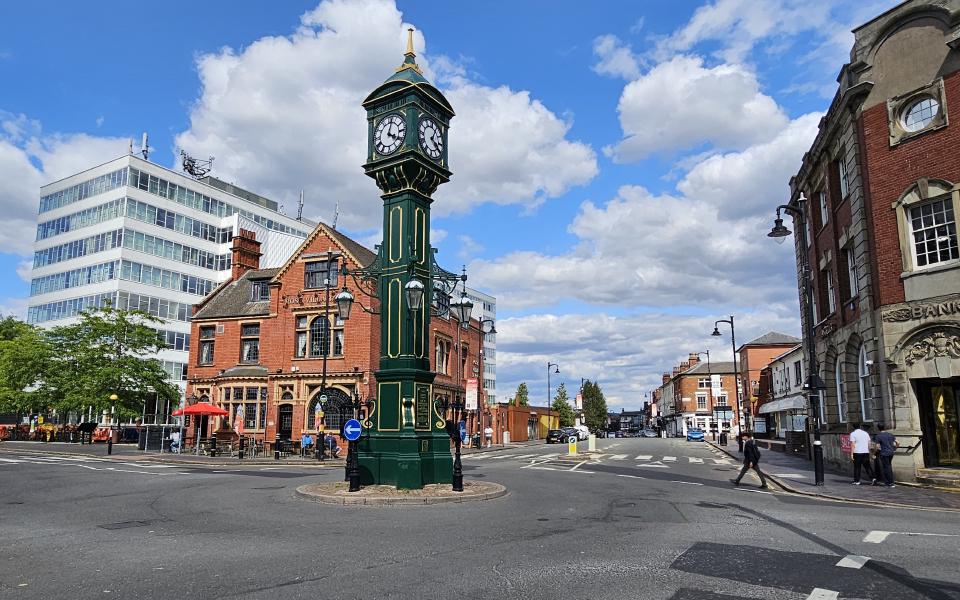
Birmingham UK
Reading time: 9 minutes
July 31, 2025
I made a one week trip to Birmingham, UK, at the beginning of July. It was my first trip to the UK, my first trip to England, and my first city turned out to be England’s Second City. Seeing how nice Birmingham was, I hope to make that trip to London some day soon, but Second City certainly ranks as a fine entry point too.
The trip was both for sightseeing and for attending the International Sketchnote Camp 2025. I got in a few days early to get acclimated and to do some sightseeing, and also kept 1 day after the conference to add on a few more sights. The conference itself was wonderful, and having attended last year’s conference in San Antonio, I was able to build on my beginner skills and make new connections.
Birmingham
Picture a jar filled with delightful Birmingham impressions: walkable; trains, train stations, a tram line, and double-decker buses; vegan, vegetarian, and desi food options; traditional and contemporary architecture; diversity, including a robust Punjabi community; history, particularly in regards to the Industrial Revolution; street art in Digbeth; and plenty more. While English is the language, it is British and sufficiently “European” to be worth visiting for any American.
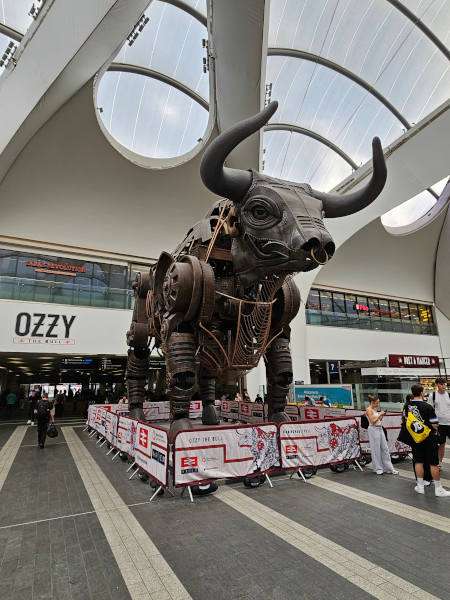
The city is the home of heavy metal, of Black Sabbath and Ozzy, and with the surrounding area, home to other great bands like Judas Priest and Napalm Death. In fact, the big final concert headlined by Black Sabbath - “Back to the Beginning” - was held that Saturday (7/5). Although I don’t listen to much metal these days, I think I would have enjoyed it. But from what I heard chatting with one metalhead sporting the concert t-shirt at the airport, the show sold out quickly on the very first day. Either way, there were plenty of tributes to Ozzy and Black Sabbath scattered throughout the city - a custom bench, murals, an outdoor exhibition, an indoor exhibition at the Birmingham Art museum, the Ozzy the Bull statue, etc.
In analyzing Birmingham, one could see that it has a history - a city of industry and manufacturing; a city that suffered greatly from bombing raids during World War 2; in recent decades, a city that has seen a decline in manufacturing and which is looking to forge a new identity for the 21st century. There is an optimistic energy, no doubt fueled by the diversity, the mass transit, and the pedestrianized areas such as New Street.
Food
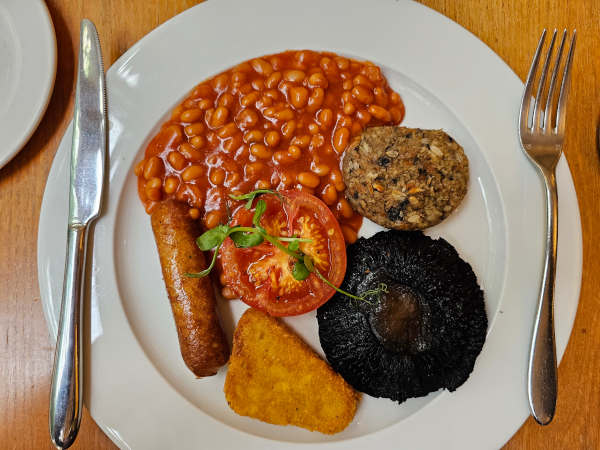
Birmingham is great for vegetarians and vegans. Traditional style options I had included jacket potato plus salad (Black Country Life Museum), a hearty vegan breakfast (baked beans, sausage, tomato, potato, and mushroom) at the Macdonald hotel, and pies with mash and peas at Pieminister. Dishoom offered Mumbai and traditional Indian breakfasts, including haldi doodh. My dinner at the Indian Steatery included beet roti, black dhal, and pani puri.
Throughout, I felt a level of thoughtfulness and care for vegans, vegetarians, and those gluten-free, on par with and sometimes exceeding what I find in the US, including New York. At every place, I would get asked first: “Do you have any allergies?” The menus would highlight vegan and vegetarian items, as expected, but typically there would be a good number of choices. There’s always, or at least for now in the present state of the world, some sense of making a sacrifice, but it felt like a non-issue there. Moreover, there was even a vegan exhibition in the hip public library.
Punjabi community
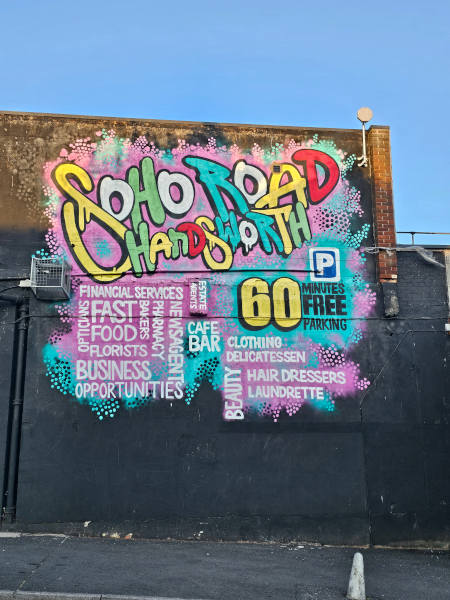
As a half-Punjabi Sikh, I still try to connect with some part of Punjab whenever I can. It’s a little hard for me to make it to gurdwaras in the US, so usually I visit them only in India. But with the strong community in Birmingham, gurdwaras are everywhere. I was able to visit two - Soho road and Sedgley Street gurudwaras - where I was able to spend some time in the darbar and then have langar. It was a special experience for me.
Other things I learned - bhangra is a part of the music scene and has a rich history here. Punjabi MC is from nearby Coventry, and I came across 7 or 8 nice bhangra songs in a “Made in Birmingham” spotify playlist - including songs like “Soho Road Utey” and “Mera Laung Gawacha”. On my last day, I paid a visit to the famous Soho road, which reminded me of India Square in Jersey City, but three or four times longer and perhaps a tad rougher yet still having that special Punjabi charm. It even had a Punjab National Bank!
Sightseeing
For the culturally minded tourist, there are ample attractions. On my first day, I started out at the Ikon gallery, a contemporary art museum that has a nice gift shop with interesting books. One of those books that I purchased was “Birmingham: The Brutiful Years”, which holds a collection of essays discussing buildings and structures in the Brutalist style, some of which are no longer around. It’s paperback, color, nicely designed, and brumming with photos.
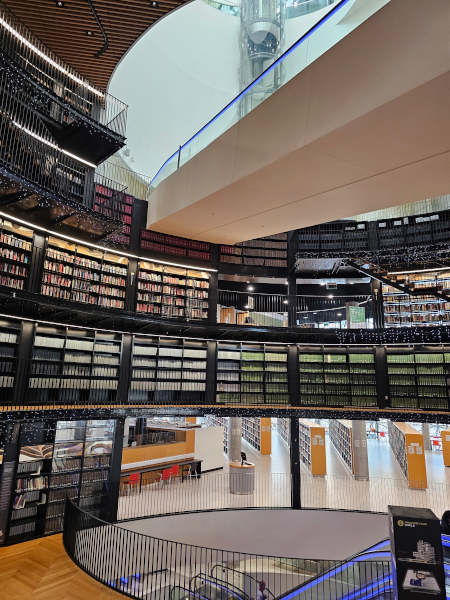
Nearby was Brindleyplace, where I strolled afterwards, checking out the canals and buildings. Possibly there were canal tours, which I would have liked to have done. Also in the area was the public library, a can’t miss building with a colorful and circular-patterned exterior and an equally interesting open interior as well. There were some exhibits (like the vegan one), a Shakespeare room, a roof garden, and outdoor areas with great views.
On my second day, I checked out the Birmingham Art museum, which had an exhibition on Ozzy as well as some traditional fine art and exhibits on Birmingham’s industrial past. Then I took a short trip outside the city to the Black Country Life Museum. One could easily spend hours here, which I did, checking out things such as the Underground Mine tour and another tour at the Workers’ Institute. I also did the Dudley Canal tour, which is located at the edge of the museum grounds. From what I have heard, scenes from Peaky Blinders were filmed here, although I had only seen a few episodes before the the trip, so couldn’t make much of a connection there.
The next day, I focused back on Birmingham, starting the morning with the Back to Backs tour, that showed how people lived in Birmingham back in the late 19th and early 20th centuries. In the afternoon, I explored the Jewellery district, doing tours at Coffin Works and the Pen Museum (tip - good idea to book tours weeks if not months in advance). Heading back into the city center, I also checked out the Birmingham Cathedral, which has famous stained glass windows by Edward Burne-Jones.
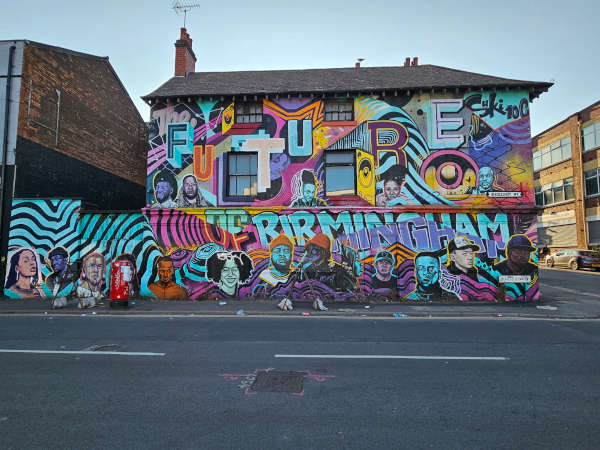
In the evening, I explored Digbeth, spending a few hours checking out the street art, of which there are several captivating works. Great street lettering as well.
Side trip - Coventry
Emotion, reconciliation, political awareness, hope.
Coventry is a must-see stop, mainly for the Coventry Cathedral, but I would like to also add the Two tone museum. The original cathedral was bombed during World War 2, leaving only the walls and a tower standing. Next to it, a new cathedral was built, designed by architect Basil Spence. It’s a poignant site, something to reflect on afterwards.
After having tea with cake at St Mary’s Guildhall (unfortunately, did not have time to see the tapestry), I checked out the Two Tone Museum (a short bus ride away). Two tone was a style of music from the late 70s/early 80s representing a fusion of ska, punk, and reggae by bands such as The Specials, The Selecter, Madness, and The Beat. A few famous songs in this style include “Gangsters”, “Too Much Pressure”, “A Message to You Rudy”, and “Ghost Town”. All this was covered in the Two Tone museum, which also made note of other famous Coventry musicians such as Delia Derbyshire (who composed the Dr. Who song) and Punjabi MC. There was a front half portion of the “Ghost Town” car in the museum, where one of the guides was kind enough to take a photo of me, hands on the wheel.
Side trip - Iron Bridge
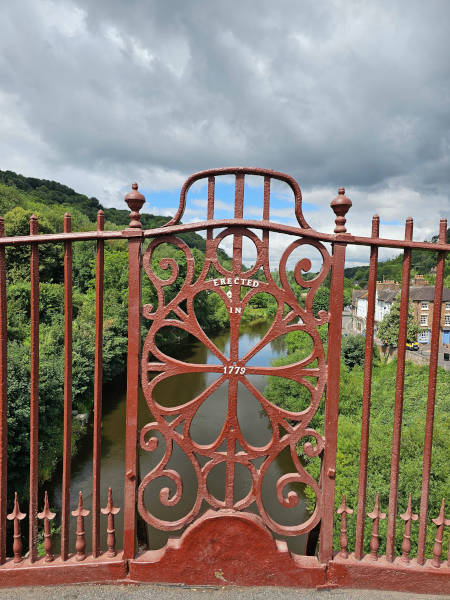
Anyone interested in the Industrial Revolution and trying to understand how the world turned out this way would do well to make a trip here. Also, many of the sites were open on a Monday when I visited, which is another plus; however, the hours are seasonal, so best to confirm beforehand.
Getting here takes about a forty minute train ride to Telford, followed by a short cab ride to Iron Bridge. It’s a charming, developed town (from the website, I had the opposite impression of a place out in the forest), and walkable. The first thing to see was the famous Iron Bridge, which looked like a nice, small, regular bridge - a testament to it’s importance.
From there, it was a mildly strenuous, twenty minute walk to the Coalbrookdale museum of iron. Here there were informative and interesting exhibits on everything iron, such as the history of iron-making, the significance of Iron Bridge and the Coalbrookdale factory, and a showcase of the various manufactured iron products produced in the factory on site.
The Old Furnace, just across from the museum, was where Abraham Darby in 1709 figured out how to produce cast iron at scale from smelting iron ore with coke (heated coal). Before then, charcoal was used, which was fragile and difficult to transport. This site is considered the “birthplace of the Industrial Revolution.” It is a fascinating brick structure, a little worn from use, possessing a certain sanctity.
Afterwards, I took a cab to the Blists Hill Victorian town, where I had about an hour to browse around and catch a few places. Similar to the Black Country Life Museum, it’s filled with stores and people in period dress. The candy store was a highlight; make sure to ask for vegan candies, as some may contain gelatin (the shopkeepers should have a book behind the counter with ingredient information on each of the candies). Finally, I took a cab back to Telford, and caught the next train back to Birmingham.
Itinerary
- Day 1
- Arrive in Birmingham in the afternoon
- Ikon Gallery
- Walk around Brindley Place
- Public Library
- New Street Station shops
- Day 2
- Birmingham Art Museum
- Black Life Country Museum
- Dudley Canal and Caverns tour
- Day 3
- Back to Back tour
- Birmingham market
- Jewellery District - Coffin Works and Pen Museum
- Birmingham Cathedral
- Digbeth Street Art
- Day 4
- Coventry
- Coventry Cathedral
- Two Tone Museum
- Fargo Village
- ISC 2025 conference start - evening
- Coventry
- Day 5
- ISC 2025 conference
- Day 6
- ISC 2025 conference
- Day 7
- Iron Bridge
- Iron Bridge
- Coalbrookdale Museum of Iron
- Iron Furnace
- Blists Hill Village
- Soho Road
- Iron Bridge