
Marathon trip to Tokyo
Reading time: 10 minutes
March 31, 2023
Another marathon vacation with my good marathoner friends, this time in Tokyo. As usual, they ran, I watched, and the rest of the time we checked out a meaningful fraction of Tokyo’s top attractions. Given the way I like to travel, I spent a fair amount of time preparing for this trip, and have some reflections on that, as well as a few other topics.
How much to prep?
Like any major world city, there are countless things to do. You could, and should, spend hours researching. We found Lonely Planet’s Guide to Tokyo to be really helpful, which could be a great option by itself if you’re short on time, as you can read it on the plane.
Basic trip preparation formula: skimming the official tourist websites and wikipedia pages is a start, but I found it helpful going a bit further, into the language and culture, books, videos, and even rock songs. For the (non-Asian) US traveler, Japan is in many ways a deeper cultural contrast than say Europe, and so merits as much prep as one has time for to have a better-than-great experience.
language prep
For language prep, I had spent about two months, four to eight hours per week. Looking back, I would have preferred putting in at least another four months. I had covered the hiragana and katakana writing systems, and had reviewed about forty to fifty kanji. Quite far from even a basic level of competency. I could communicate a few basic expressions, and would mostly end up relying on Google translate. For the English-speaking learner, there is simply a lot to cover.
Indulging in an “if only…”, I do think I could have hit that magical inflection point with more preparation and a deeper understanding, where just being there would have accelerated my language learning experience, absorbing signs, characters, overheard dialogue and simple conversations with people. Putting these thoughts aside, the following do seem like attainable scenarios:
- not being so reliant on Google translate
- being able to engage in basic conversations such as asking for directions or finding out how late a place is open
- reading signs - in the metro, on storefronts, or ingredient labels on food items
Still far from the “deep conversations, literature, films” stage, but maybe doable for a first trip?
My Language learning journey in this order:
- Tuttle books
- Learning Japanese: Hiragana and Katakana (2nd edition) by Kenneth G Henshall with Tetsuo Takagaki
- I’m Learning Japanese: Learn to Speak, Read and Write the Basics by Christian Galan
- Unlocking Japanese by Paul Noble
- This is a fun read, with an interesting and practical building block approach
- Busuu app
- did about 6 out of 15 chapters of the beginner level, mainly focused on re-drilling the Hiragana and Katakana
- Kanji app (Android)
- an incredible number of features
- nice stroke animations
- offers a number of in-app purchases, which I ended up going for
culture prep
If time is tight, you could skip the language and just focus on the culture - that would still be enriching and helpful. The “Understanding Japan” course, which are part of the Great Courses and consist of 24 half hour lectures, are taught by the engaging Professor Mark Ravina and cover a number of topics, roughly half on history and half on other areas such as the arts, language, and contemporary life. Also helpful for a more concise summary would be the history and culture sections in the Lonely Planet Tokyo guidebook.
A few key cultural notes:
- Japan’s history is characterized by alternating periods of isolation and globalization
- epoch time periods (from Understanding Japan course)
- Globalization 1: 500 - 800 AD
- Isolation 1: 900 - 1300 AD
- Globalization 3: 1300 - early 1600s
- Isolation 2: 1600s - 1850s
- Globalization 3: 1850s - current
- Making of modern Japan, from post-WW2 to key events in the late 80s/early 90s
- Japanese industrialists were big fans of William Edwards Deming
- Aimed to correct things upfront and make products free of defects
arts prep
As I keep an interest in the arts, I did read the slender “In Praise of Shadows” by Jun’ichiro Tanizaki. It offers insights that contrast Western vs Japanese values and sensibilities. Whether there is a special reverence for shadows in modern Japan, it is hard to tell from just seeing Tokyo. But there is something to the expressed nostalgia of an alternate perspective that had to come to terms with the dominant “progressive Western” view. Take for example the idea of modern conveniences arriving if only given a little more time.
we would one day have discovered our own substitute for the trolley, the radio, the airplane of today
I also had made sure to check out some songs. I bought these on iTunes:
- Haruka Kanata by Asian Kung-Fu Generation
- Ashioto - Be Strong by Mr. Children
- Doll by SCANDAL
- Kurenai by X Japan
- Mikazuki Sunset by sakanaction
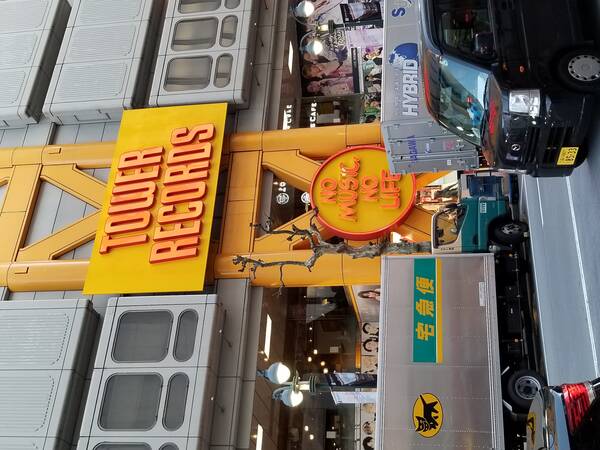
Worth mentioning that there is a Tower records selling all your favorite cds. Unless you’re fluent, finding those Japanese cds can take some work, but it’s possible. I did end up buying the cd albums of X Japan and Asian Kung-Fu Generation that contained those songs I had purchased.
personal interests
Late 80s/early 90s video game era of Nintendo, Mario, Link, Zelda, Mega Man, etc. - these characters (is this a pun?) still resonate with me. It would be a good idea to reflect on what Japanese cultural exports resonate with you, and incorporate that into your itinerary.
Maybe you created some interesting origami figures, like the crane. How about Zen meditation or tea ceremonies? Japanese interior design is also quite popular, and the wabi-sabi aesthetic is becoming more well known. How can we forget manga and anime? And there are countless other things that I have heard of but have never looked into (eg pokemon, Hello Kitty, Marie Kondo).
Sightseeing
We were in Tokyo for about a week. Here is a list of attractions that we checked out:
- Toyusu fish market
- Tokyo Skytree
- Get a really expansive perspective on the city
- Studio Ghibli museum
- One of us got tickets in advance. He said it sold out for the month within 10 minutes.
- Meiji-jingo shrine
- sacred Shinto experience
- Shibuya Crossing
- mesmerizing.
- There is a view site that costs money, but I felt it was worth it for getting good photos and videos
- Tokyo National museum
- amazing experience, even more if you are into arts and cultural artifacts
- large gift shop too
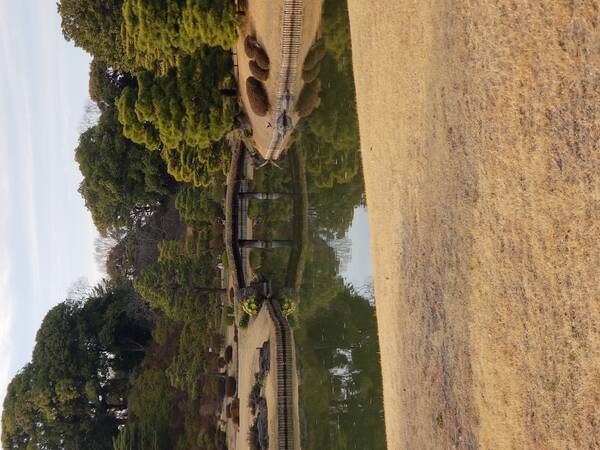
- Rikugi-en park
- nice garden
- a couple trees had blooming flowers, but no cherry blossoms
- Senso-ji temple
- sacred Buddhist experience
- can get crowded, but I went on a Tuesday morning, which was fine
- some nice souvenir and food shops
I also ventured out on my own to check out:
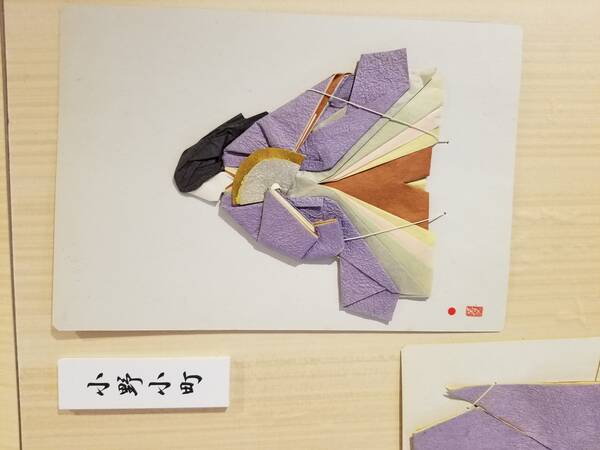
- Origami Kaikan center
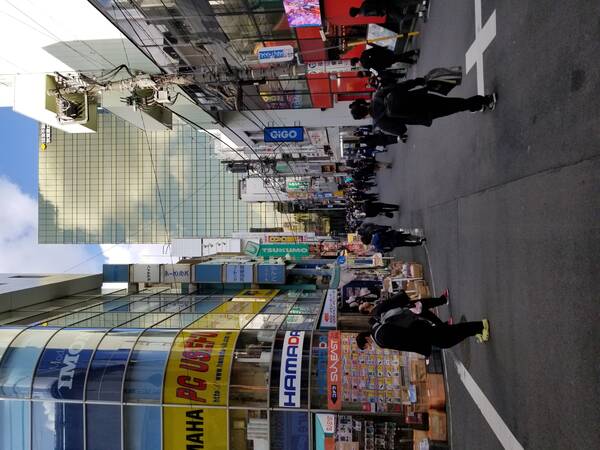
- Akihabara
- I have not been a gamer for many years, but I have many happy memories playing Nintendo 8-bit, Gameboy, and later computer games from elementary school through high school
- Checking out some of the stores stirred up some happy, nostalgic feelings
- Harajuku
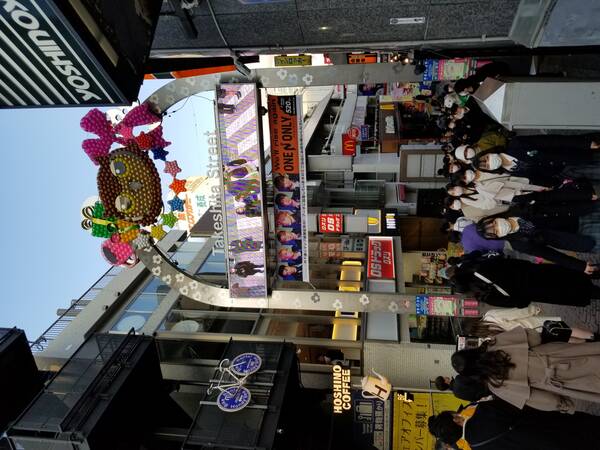
- Takeshita Dori - crepes
- Omotesando - architecture
- Yanaka Ginza
- Roppongi Hills
- The Mori art museum is open late. It’s contemporary art, which I don’t typically follow, but they had a nice exhition going on
- The city view is also pretty cool, a different perspective than Tokyo SkyTree
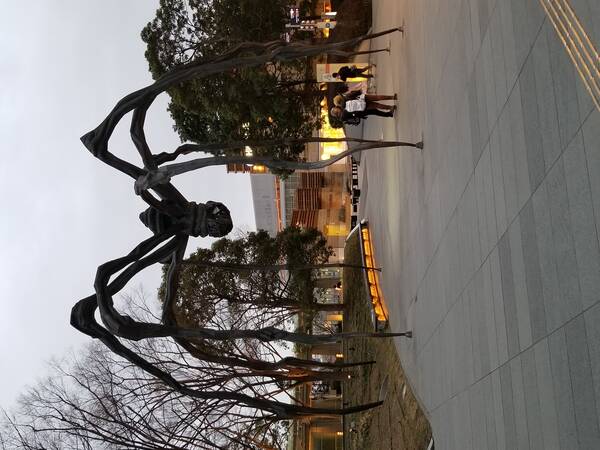
- That giant spider is in Roppongi Hills
In general, all these sights are well maintained, high quality, reasonably priced, and generally fun, positive experiences.
Clean city, courteous people.
I was under the impression that cities are under a lot of stresses, and that naturally there would always be some layer of grime that periodically gets scraped and cleaned by the sanitation forces only to re-emerge not too long afterwards. Entropy applied to urban systems. Tokyo will change that impression.
clean
Where are the trash cans?
metro
Clean, Secure, and Reliable. Maybe it was my imagination, but it seemed as if the floors were sparkling. I didn’t think it was possible for a mass transit vehicle to be so clean. Tokyo is worth the trip just for this experience.
Reliability I kind of expected. I think I only encountered one delay the whole time. Two other interesting quirks:
- the subway jingles when a train arrives at the station and opens its doors, some of which are quite ear-wormy
- there is an edge barrier safety feature in many but not all stations to prevent passengers from falling onto the tracks.
Another interesting feature are the presence of clean public restrooms at many of the stations. For the bold, if you’re lucky, you might spot a non-western one.
but…
- Plastic, lots of plastic. Plastic bags, Plastic wrappers. Hope it’s biodegradable.
- The city is very developed, which is good. Not too many parks though.
- Trash can be found lying on the sidewalks here and there. The average tourist will never come across them, but the vegetarian tourist hunting for that special dedicated restaurant likely will.
- Where are the poor people begging in the streets? Are they all taken care of?
- No street art. Some tags here and there.
people
Positive impressions and interesting customs
- Accept items like cash with two hands and a head bow. Lots of bowing.
- Everyone wears masks. No jaywalking. Hand sanitizers, and people offering to sanitize your hands before entering a space
- A pharmacist kindly walked with me out of his store in a busy station to a nearby ticket machine and helped me get a Pasmo card
- No accepting of tips.
city streets and layout
Some observations
- Bike and people on sidewalks, separated by divider. Berlin had a similar design.
- Not too much traffic. Did not see any traffic jams.
- Large streets enclosing blocks subdivided by narrower pedestrian-focused streets
Vegetarian
Tokyo is not vegetarian-friendly, but there are wonderful vegetarian options. Sort of a paradox. This is coming from someone grounded in a western-US mindset, who eats Indian food daily and fast casual or fancy vegan a few times a month in New York City. This is a pretty high bar. My trip experience along with my thoughts should shed some light on this situation, or make for a nice umeboshi onigiri mind-snack.
Many years ago I went with a co-worker to a Vietnamese restaurant in Jersey City. The menu had close to a hundred items, but they all seemed to have meat. When it came time to place an order, I asked the owner if she could point out any vegetarian items. With a pained look, she explained that they did not have vegetarian items by design. The concern was not to incur any sort of “Buddhist penalty” by offering a vegetarian item that could accidentally be contaminated with some iota of meat. In the end, she did offer some raw vegetables, so I had made a meal out of that.
It seemed to me that the restaurant workers in Tokyo clearly understood vegetarianism. And it seemed as if by design there would be no vegetarian option on any menu, even restaurants at museums or shrines. Sometimes I was limited to a bowl of rice or plain udon noodles - you’ll find yourself in this situation unfortunately if you are in a mixed group. A second complicating factor that I also had read was that Japanese restaurants prefer to specialize in some area rather than offer a wide range of choices as in western restaurants (eg focusing on ramen or udon or any number of specialties).
Our hotel’s breakfast was fairly large, but most items had some kind of chicken or bacon item attached; only bread and butter was safe. Even a dish marked as vegan might still have fish present. In general, most restaurant staff seemed frustrated to encounter a vegetarian, and would try to passively discourage me from eating there.
But with Google maps and Google translate, I was able to find nice vegetarian places and suitable convenience store items.
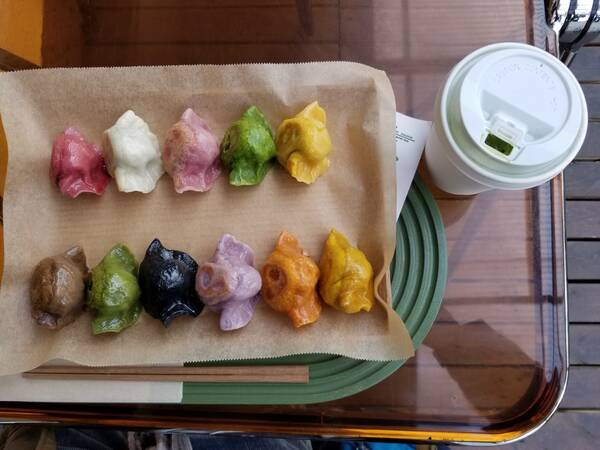
- rainbow dumpling
- vegan ramen
- Tantan
- also Kyushu Jangara for a traditional experience
- Indian restaurants
- Nawab (naan, sabzi, pakora)
- Nataraj
There are quite a few Indian restaurants in Tokyo, which I found surprising but grateful for as well.
In conclusion - make the trip
Tokyo is definitely worth the trip, and likely multiple trips. The culture, technology, people, infrastructure - it’s enough to shift anyone’s perspective, provided one retains some level of openness. Preparation is key for a quality experience, and more so if you are vegetarian.